HMO Kitchen Requirements: Size, Equipment & Standards
Complete guide to HMO kitchen requirements in the UK. Covers minimum sizes, equipment ratios, worktop space, storage, and local authority standards.
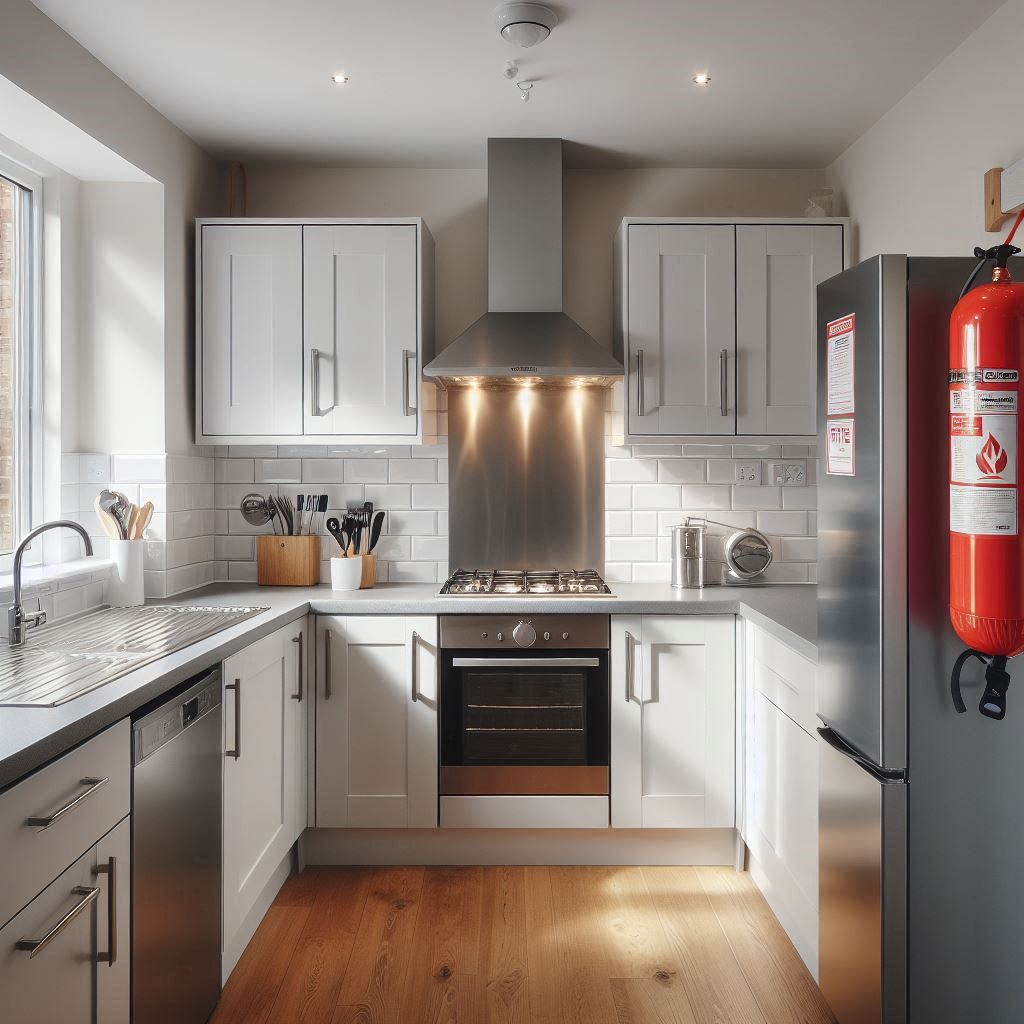
Kitchen facilities cause more HMO licensing disputes than almost any other amenity. The requirements are specific, the equipment lists are detailed, and councils inspect kitchens thoroughly.
This guide covers kitchen sizes, equipment requirements, and the standards you need to meet.
Quick Navigation
- Kitchen Size Requirements
- Equipment Requirements
- Worktop and Storage Space
- Shared Kitchen vs Kitchenettes
- Kitchen Safety Requirements
- Ventilation and Extraction
- Local Authority Variations
- Building Regulations
- Kitchen Planning Checklist
Kitchen Size Requirements
Kitchen size depends on the number of people sharing the facilities. Councils specify minimum floor areas based on occupancy.
Standard Kitchen Size Requirements
| Occupants Sharing | Minimum Kitchen Size |
|---|---|
| 1-3 people | 5.5m² |
| 4-5 people | 7m² |
| 6-7 people | 9m² |
| 8-10 people | 11m² |
| 11+ people | Additional space required |
These figures are typical guidance. Your council may specify different requirements.
What Counts Toward Kitchen Size
Your kitchen measurement should include:
- Floor area used for cooking, preparation, and storage
- Space occupied by appliances and units
- Circulation space between units
What Doesn't Count
Exclude from your measurement:
- Dining areas (unless combined kitchen-diner with adequate space)
- Utility rooms or separate laundry areas
- Corridors or through-routes
- Areas below 1.5m ceiling height (in rooms with sloped ceilings)
The Space Must Be Usable
A kitchen that technically meets the minimum size but has poor layout may still fail inspection. Councils assess:
- Can multiple people use the kitchen simultaneously?
- Is there adequate circulation space?
- Can all appliances be accessed safely?
- Is there room to prepare food away from cooking hazards?
Worth considering: Design kitchens 10-15% larger than the minimum. This provides buffer for measurement discrepancies and creates a more functional space.
Equipment Requirements
HMO kitchens must contain specific equipment based on the number of occupants. Requirements scale with occupancy.
Cooking Appliances
| Occupants | Cooking Requirement |
|---|---|
| 1-5 people | 1 cooker with 4-ring hob and oven |
| 6-10 people | 2 cookers, OR 1 cooker + 2-ring hob + microwave with oven function |
| 11+ people | Additional cooking facilities proportionate to occupancy |
What counts as a cooker:
- Combined hob and oven unit (gas or electric)
- Separate hob plus separate oven
- Range cooker
What doesn't count:
- Microwave alone (unless combined with conventional oven)
- Toaster or sandwich maker
- Slow cooker or rice cooker
Sinks and Washing Facilities
| Occupants | Sink Requirement |
|---|---|
| 1-5 people | 1 sink with drainer and hot/cold water |
| 6-10 people | 2 sinks (or 1.5 bowl sink with drainer) |
| 11+ people | Additional sinks proportionate to occupancy |
Sinks must have:
- Constant hot and cold water supply
- Drainer or draining area
- Adequate size for washing pots and pans
Refrigeration
| Occupants | Refrigeration Requirement |
|---|---|
| 1-5 people | 1 standard fridge-freezer (or equivalent capacity) |
| 6-10 people | 2 fridge-freezers, OR 1 large fridge-freezer + additional fridge |
| 11+ people | Additional refrigeration proportionate to occupancy |
Capacity guidance:
- Standard fridge: approximately 150-200 litres
- Standard freezer: approximately 50-80 litres
- Each tenant needs dedicated fridge/freezer space
Food Storage
Dry food storage requirements:
| Occupants | Storage Requirement |
|---|---|
| Per person | 1 lockable cupboard (minimum 0.1m³) |
| Shared storage | Additional cupboards for shared items |
Lockable storage is important. It prevents food theft disputes and gives tenants secure space for their groceries.
Electrical Sockets
| Occupants | Socket Requirement |
|---|---|
| 1-5 people | Minimum 4 sockets (in addition to dedicated appliance points) |
| 6-10 people | Minimum 6 sockets |
| 11+ people | Additional sockets as required |
Sockets must be:
- Positioned safely away from water sources
- Adequate for small appliances (kettles, toasters, etc.)
- Not overloaded with adaptors
Worktop and Storage Space
Beyond minimum equipment, councils assess whether there's adequate preparation and storage space.
Worktop Requirements
| Occupants | Worktop Requirement |
|---|---|
| 1-5 people | 2 linear metres minimum |
| 6-10 people | 3 linear metres minimum |
| 11+ people | Additional worktop proportionate to occupancy |
Worktop specifications:
- Minimum depth: 500mm
- Hygienic, easy-clean surface
- Heat-resistant areas near cooker
- Positioned to allow safe food preparation
Clear Worktop Space
Not all worktop counts toward the requirement:
- Space occupied by small appliances (kettle, toaster) reduces usable area
- Drainer area doesn't count as preparation space
- Space directly adjacent to hob is for cooking, not preparation
Worth considering: Provide 500mm clear preparation space per person sharing the kitchen. This exceeds minimum standards but significantly improves usability.
Storage Unit Requirements
| Storage Type | Typical Requirement |
|---|---|
| Base units | 1 single unit per person |
| Wall units | 1 single unit per person |
| Lockable cupboard | 1 per person (can be within larger unit) |
Storage must be:
- Accessible to all users
- Adequate for food, cookware, and utensils
- Include at least some lockable provision
Shared Kitchen vs Kitchenettes
HMO kitchen provision can be through shared kitchens, individual kitchenettes, or a combination. The same decision applies to bathroom provision—shared facilities vs en-suites.
Shared Kitchen Model
Advantages:
- More efficient use of space
- Lower installation and maintenance costs
- Easier to achieve equipment ratios
- Simpler gas and electrical installations
Disadvantages:
- Tenant conflict over cleanliness and usage
- Requires robust cleaning arrangements
- Peak-time congestion
- Food theft issues
Best for: Student HMOs, budget professional lets, larger properties where individual kitchenettes aren't practical.
Individual Kitchenette Model
Advantages:
- Tenant privacy and independence
- No sharing conflicts
- Attracts tenants willing to pay premium rents
- Each tenant responsible for own space
Disadvantages:
- Requires more space overall
- Higher installation costs (multiple plumbing runs, electrical circuits)
- More appliances to maintain
- Reduces lettable bedroom floor area
Best for: High-end professional HMOs, studio-style lets, properties targeting self-contained living.
Kitchenette Minimum Requirements
If providing individual kitchenettes, each must include:
- 2-ring hob minimum (4-ring preferred)
- Microwave with oven/grill function, OR conventional oven
- Sink with hot and cold water
- Refrigerator with freezer compartment
- 1m minimum worktop space
- Storage cupboard
- Adequate electrical sockets
Combined Approach
Many successful HMOs combine:
- Shared main kitchen with full cooking facilities
- En-suite rooms with tea/coffee making facilities (kettle point, mini-fridge)
This offers flexibility without the space and cost of full individual kitchens.
Kitchen Safety Requirements
Kitchen safety is critical in HMOs. Fire risk is highest in kitchens, and multiple users increase hazard potential.
Fire Safety Equipment
Fire blanket (mandatory):
- Must be provided in every kitchen
- Positioned within reach of cooker but not directly above it
- Minimum size: 1m x 1m
- Wall-mounted in quick-release container
- Replace after any use
Fire extinguisher (typically not required):
- Not usually mandatory in HMO kitchens
- If provided, must be appropriate type and regularly serviced
- Some councils prefer fire blankets only to avoid incorrect extinguisher use
Heat and Smoke Detection
Heat detector in kitchen:
- Heat detectors (not smoke detectors) should be installed in kitchens
- Smoke detectors cause false alarms from cooking
- Must be interlinked with the property's alarm system
Fire door:
- Kitchen door should be FD30 fire door
- Self-closing mechanism required
- Keeps fire and smoke contained
Cooker Safety
- Cookers must be stable and properly installed
- Gas cookers need Gas Safe registered installation
- Electric cookers need appropriate electrical supply
- Space either side of hob for pan handles
Gas Safety
For kitchens with gas appliances:
- Annual Gas Safety Certificate required
- Carbon monoxide detector in kitchen
- Adequate ventilation for combustion
- Isolation valve accessible
Ventilation and Extraction
Kitchens produce moisture, odours, and combustion products. Adequate ventilation is essential.
Ventilation Requirements
Kitchens with openable windows:
- Background ventilation through trickle vents or equivalent
- Mechanical extract ventilation recommended
- Window alone may not be adequate for intensive cooking
Kitchens without openable windows:
- Mechanical extract ventilation mandatory
- Minimum extract rate: 60 litres/second (adjacent to hob) or 30 l/s (elsewhere)
- Must discharge to outside
Extraction Options
| Type | Best For | Typical Cost |
|---|---|---|
| Cooker hood (extract) | All kitchens with hobs | £100-£400 |
| Cooker hood (recirculating) | Where ducting is impractical | £80-£300 |
| Ceiling extract fan | Smaller kitchens, budget option | £50-£150 |
| Inline duct fan | Where hood isn't suitable | £100-£250 |
Extract hoods are preferred over recirculating hoods. They remove moisture and odours rather than just filtering and recirculating.
Ducting Considerations
- Extract must discharge to outside (not into roof space)
- Duct runs should be as short and straight as possible
- Longer runs need more powerful fans
- Fire dampers may be required where ducts pass through fire compartments
Common Ventilation Mistakes
Recirculating instead of extracting: Recirculating hoods don't remove moisture, leading to condensation and mould.
Inadequate fan capacity: Small fans can't handle the extraction needs of busy HMO kitchens.
Blocked or disconnected ducts: Tenants sometimes block vents; ducts can become disconnected over time.
No makeup air provision: Extract ventilation needs replacement air. Ensure windows can open or provide background ventilation.
Local Authority Variations
Kitchen requirements vary between councils. Some are significantly stricter than others.
Common Variations
Size requirements: Some councils specify larger kitchens than the standard guidance. A kitchen adequate in one area may be undersized in another.
Equipment specifications: Some councils require:
- Minimum cooker specifications (e.g., specific hob sizes)
- Specific refrigerator capacities
- Additional equipment (dishwashers for larger HMOs)
Layout requirements: Some councils specify:
- Minimum distances between appliances
- Required circulation space
- Positioning of sinks relative to cookers
Examples of Local Differences
Council A: Requires 7m² for 5 people, accepts combination microwave as second cooking appliance.
Council B: Requires 8m² for 5 people, requires two separate conventional cookers for 6+ occupants.
Council C: Specifies 500mm clear worktop per person, requires all storage to be lockable.
How to Find Your Local Standards
- Download your council's HMO amenity standards document
- Contact the private sector housing team
- Request pre-application advice before committing to designs
- Review licence conditions for similar properties
Always verify before finalising kitchen designs. Retrofitting kitchens to meet unexpected requirements is expensive.
Building Regulations
Kitchen installations and modifications typically require Building Regulations approval.
When Approval Is Needed
Building Regulations apply to:
- New kitchen installations
- Relocating kitchens
- Changes to gas or electrical installations
- Modifications affecting ventilation or drainage
- Structural changes to accommodate kitchen layout
Relevant Regulations
Part F (Ventilation): Extract ventilation requirements, background ventilation.
Part J (Combustion appliances): Gas cooker installation, ventilation for gas appliances.
Part P (Electrical): Kitchen electrical installations, including dedicated circuits for cookers.
Part H (Drainage): Sink waste connections, modifications to drainage.
Part B (Fire safety): Fire doors, detection, compartmentation.
Gas and Electrical Certification
Gas work:
- Must be completed by Gas Safe registered engineer
- Gas Safety Certificate required
- Includes cooker installation and any gas supply modifications
Electrical work:
- Must comply with Part P
- Notifiable work requires Building Control notification or competent person certification
- Includes new circuits, consumer unit modifications, additional sockets
Kitchen Planning Checklist
Use this checklist when planning kitchen provision for your HMO.
Initial Assessment
- Confirmed maximum occupancy for licensing
- Identified local authority kitchen requirements
- Downloaded council's amenity standards document
- Measured existing kitchen space
- Assessed existing equipment and services
Design Phase
- Kitchen size meets minimum for occupancy
- Layout allows multiple simultaneous users
- Adequate circulation space between units
- Equipment ratios meet requirements
- Worktop space meets minimums
- Storage provision adequate (including lockable)
- Electrical socket provision adequate
- Ventilation strategy planned
Equipment Specification
Cooking:
- Cooker(s) specified and positioned
- Additional cooking appliances if required
- Heat-resistant worktop adjacent to hob
Washing:
- Sink(s) with drainer specified
- Hot and cold water supply confirmed
- Waste connection planned
Refrigeration:
- Fridge-freezer(s) specified
- Adequate capacity for occupancy
- Power supply positioned
Storage:
- Base and wall units specified
- Lockable storage per person
- Shared storage provision
Safety
- Fire blanket position identified
- Heat detector included in design
- Fire door to kitchen specified
- Gas safety arrangements (if applicable)
- Carbon monoxide detector (if gas appliances)
Ventilation
- Extract ventilation specified
- Ducting route planned
- Discharge to outside confirmed
- Background ventilation adequate
Compliance
- Building Regulations requirements identified
- Gas Safe engineer arranged (if gas appliances)
- Electrical certification arranged
- Building Control notification/approval obtained
Getting Kitchens Right
Kitchens cause more licensing headaches than you'd expect. The equipment lists are specific, councils inspect them thoroughly, and retrofitting inadequate facilities is expensive. Get your council's amenity standards document before you commit to any design.
The shared vs kitchenette decision is worth thinking through carefully—it fundamentally affects your target tenant, achievable rents, and management workload. Neither is inherently better; it depends on your property, market, and strategy.
Planning a kitchen layout for an HMO conversion? Get in touch if you want to talk through the options.
This guide was last updated in January 2026. Local authority standards vary and change periodically. Always verify current requirements with your council's HMO licensing team.
Related Articles
Continue exploring these related topics
HMO Bathroom Requirements: Ratios, Sizes & Regulations
Complete guide to HMO bathroom requirements in the UK. Covers tenant-to-bathroom ratios, minimum sizes, en-suite regulations, and local authority standards.

HMO Licensing: Step-by-Step Application Guide
Complete guide to HMO licensing in the UK. Learn when you need a licence, how to apply, what it costs, and what happens if you operate without one.
HMO Room Size Requirements UK: Minimum Standards Explained
HMO minimum room sizes in the UK: legal requirements, ceiling heights, measuring correctly, and penalties for undersized rooms.